
Menu

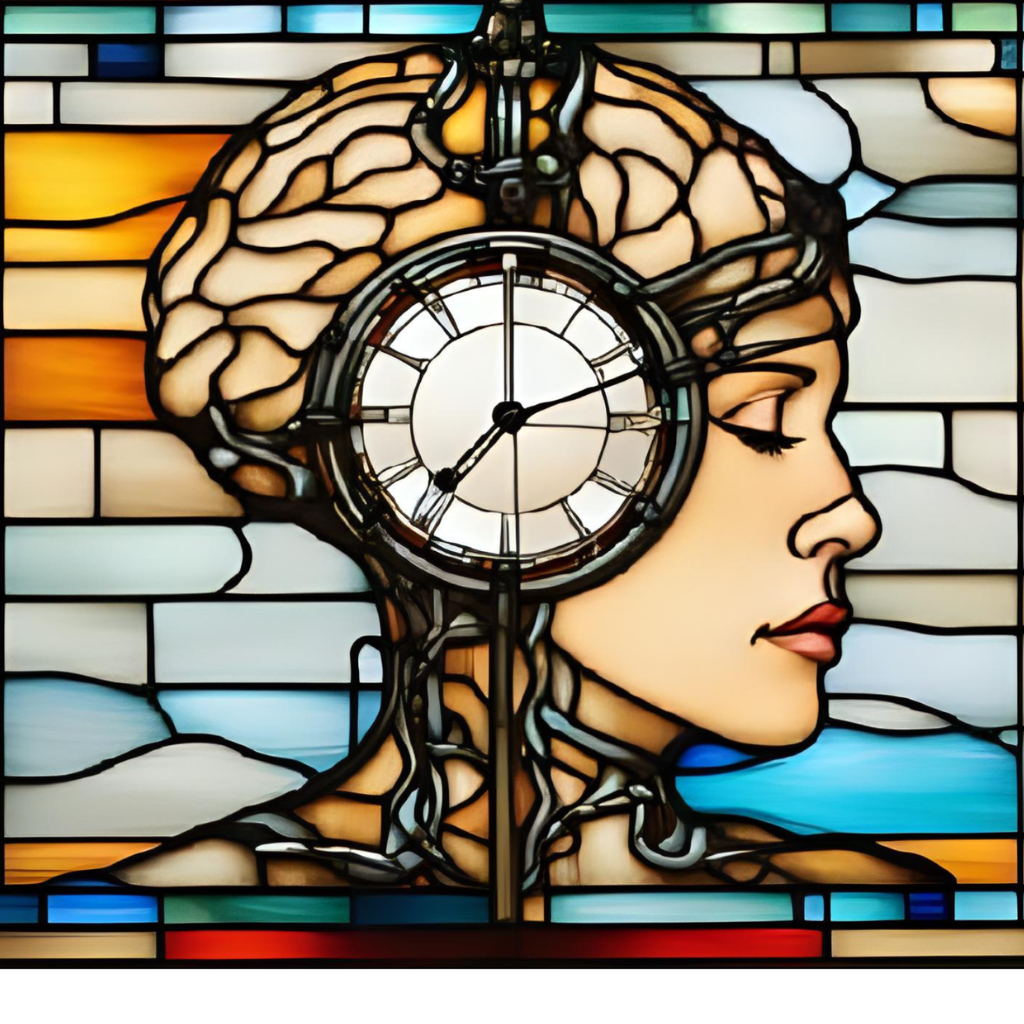
I’d picked up my phone to check the weather. The next thing I knew, 45 minutes had passed and I woke up as if from a black-out coma. What happened?
Well, I don’t need to tell you, dear Reader – you know.
Some of the reels entertained me. Some were informative in a byte-sized trivia sort of way. Many wanted to reel me (yeah) into a deeper sales relationship. None of them made a single iota of meaningful difference to my life. So why did I make the decision to engage?
Turns out, I didn’t. Make the decision, that is. I didn’t even get to the weather app.
Where did I go during those 45 minutes?
Nowhere physically and yet I travelled mentally. I was no longer present in my body as I entered the metaverse. I split and became my online avatar, a disembodied doppelgänger. It was the algorithm that lead me down the many, many rabbit holes I was happy to dive into. It knows me so well, it delivers material with just the right hook and bait to draw me in and keep me there.
There is no season of Winter, of quiet, stillness and hibernation in the metaverse. No day and night. Kingsley Dennis in his recent essay says we are suffering from ‘the new disorder of “data-insomnia” for there is no sleep within the realm of data.’ In my own professional world, I know:
How are we so willing to give up our natural biological or organisational needs in favour of a machine-generated incentive that has no off-button?
Have you noticed how much of what you view plays on making you feel understood? Is this you, is this your life? We share the things we find funny, that express exactly how we feel, that nail it. ‘We get you, and we’ve got you’ is implied in the messaging.
Didn’t we love the sense of connection Facebook gave us when it first arrived on the scene? And it was all for freeeeeee! We climbed aboard the train and never once questioned where it was really taking us to.
There is nothing for free.
Your full, engaged attention is both the prize and the price: for as long as possible without your noticing and while being monetised along the way. It’s not called ‘paying attention’ for nothing.
I don’t think our attention span is shortening; our attention span is being recalibrated and optimised to focus on things not of our conscious choosing. Our weakness for convenience is being leveraged: stuff is being curated and delivered, put in front of our eyeballs with zero effort from ourselves. Sort of like when mom used to put food on the table before us, long before we learned how to make our own choices.
We can protest that we’re being unfairly, unconsciously manipulated. We’re being driven by our limbic system’s innate hardwiring to respond to the colour red. Who can withstand checking their phone every 15 minutes, clicking on notifications, being activated by FOMO and what we might be missing?
I’ve come to the conclusion however, that there’s only one reliable antidote. It’s not will-power, it’s definitely not depending on the moral integrity of Big Tech to implement anti-addictive technologies to help me manage myself. Nor is it disappearing altogether from the online world.
No. It’s about breaking the chain to ‘the algorithm made me do it’.
Sure, it’s fun to zone out and get lost in the virtual world. But it’s not harmless. Scrolling has a real impact on our life force, our capacity to think well and our wallets. We really are the only ones in charge here.
So for now, I’m choosing this: to make a decision to scroll, and to own my own attention while I’m doing it. That way, I’m hoping to lose my taste for it altogether and feel (or fool myself?) I’m more in charge.
What do you think?
Apologies to Grace Jones for riffing on her 1985 hit Slave to the Rhythm. Although weirdly, the lyrics are so apt the song may as well have been written for our times.
Never stop the action, keep it up, keep it up
Breathe to the rhythm
Dance to the rhythm
Work to the rhythm
Live to the rhythm
Love to the rhythm
You slave to the rhythm
Here are some links to explore the intersection between humans and technology further: